
The Thanh Xuan Commune Organic Intergroup in Soc Son (Hanoi), under PGS Vietnam, recently organized a field workshop to report on the results of five composting formulas using the Japanese method and trial testing on vegetable crops, following nutritional composition and heavy metal residue analyses of the finished compost.
Composting Trials at PGS Thanh Xuan
Testing Five Composting Formulas in Thanh Xuan
This early 2025 activity marks an autonomous effort to find alternative solutions to organic input shortages by the Thanh Xuan Intergroup, which has always been a flagship pioneer in organic production within the PGS Vietnam network.
Stemming from a conversation about PGS shared by Dr. Nguyen Van Kien, Director of MekongOrganics, during a working session with Minister of Agriculture and Rural Development Le Minh Hoan, along with a phone call where the Minister promised to visit a PGS organic production area soon. A few days later, Minister Le Minh Hoan visited and worked in Thanh Xuan commune, Soc Son (Hanoi).
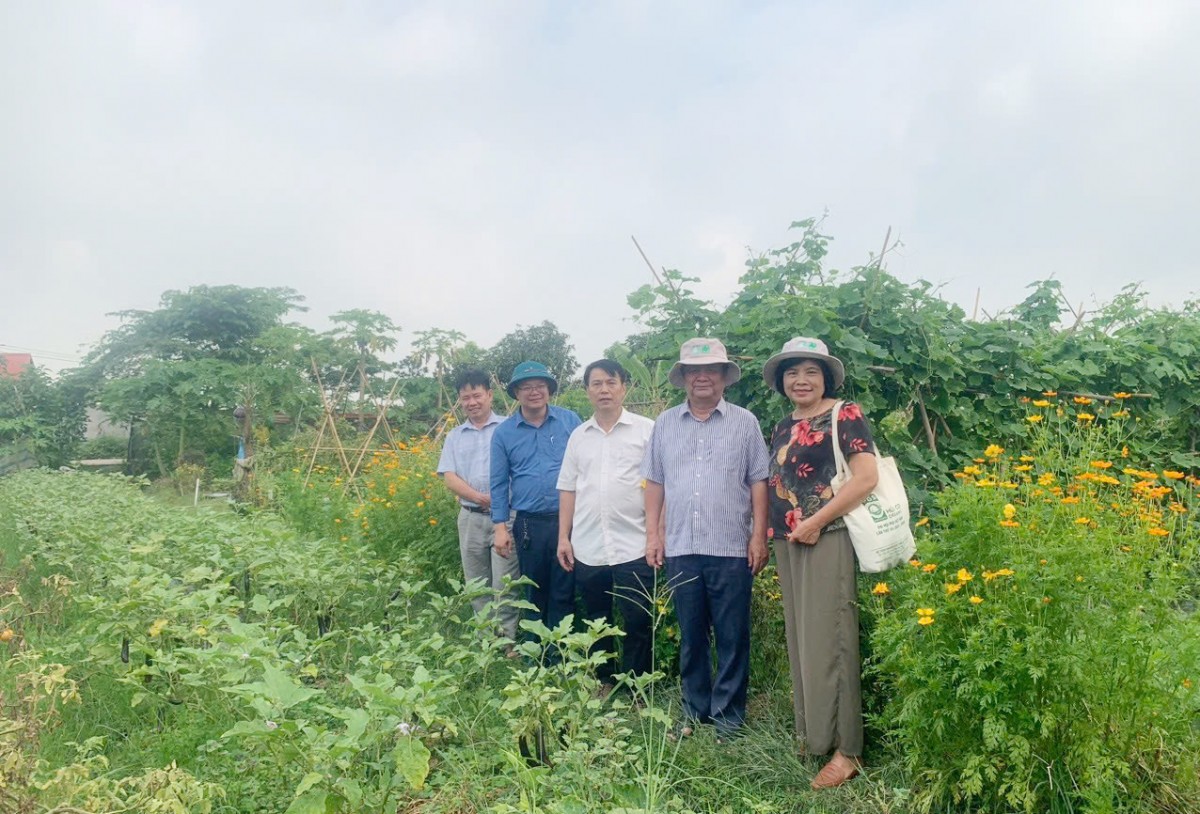
Visiting the PGS vegetable garden, the lush green of vegetables interspersed with fluttering yellow chrysanthemums is so eye-catching that anyone wandering in can hardly keep their phone in their pocket without taking photos of the beautiful scenery. The Minister, like any other visitor to the garden, was greeted naturally by farmers who did not know who he was, chatting cheerfully about the hardships of vegetable farming and the rewarding trade-offs for their health and livelihood.
Meanwhile, I took the opportunity to share the struggles and concerns regarding the search for standard-compliant organic compost at an affordable price for PGS farmers when their on-farm compost supply is insufficient. Listening to everyone's stories, the Minister suddenly phoned someone who had studied composting in Japan for three years and handed the phone to me to speak directly.
The expert connected by the Minister to transfer composting techniques was Mr. Pham Huu Loi, Director of the Japanese Language and Culture Center in Nam Dinh City. He had previously convinced Nam Dinh province and the Japanese Government to collaborate on establishing Vietnam's first Japanese-model agricultural high school, where he passionately transfers composting methods studied and researched from the Land of the Rising Sun to teach students farming practices, composting, and soil and crop nourishment.
I genuinely wanted to learn the Japanese composting method, curious to see how it differed from our usual practices. A week later, the expert team led by Mr. Pham Huu Loi and Engineer Cao Quang Ninh—an officer from the Nam Dinh Department of Agriculture—supported by the Commune Farmers' Union and the Thanh Xuan Intergroup, arrived in Thanh Xuan to provide theoretical guidance and set up the first compost pile on June 8, 2024. Subsequently, the expert team returned weekly to work alongside farmers on Saturdays throughout the month to establish subsequent compost piles.
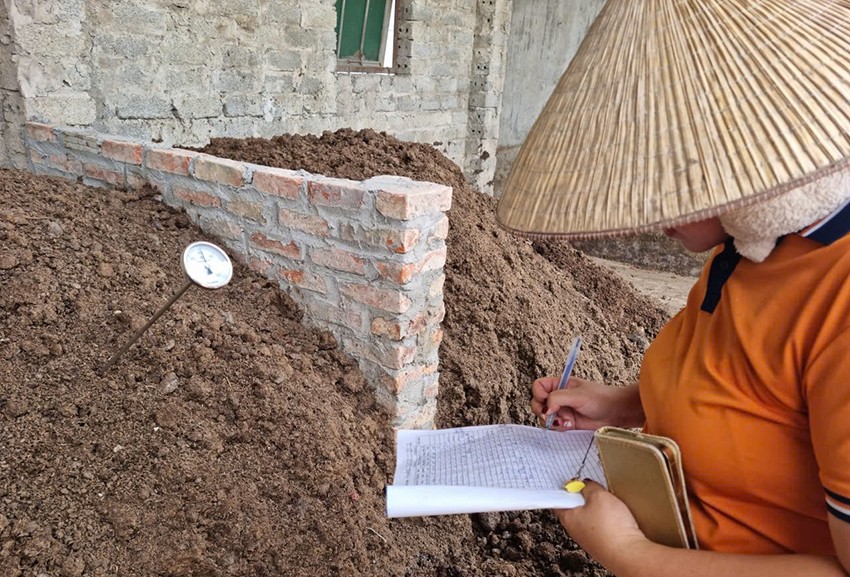
Compost pile temperatures were measured every morning, reaching 60–75°C, and were meticulously recorded.
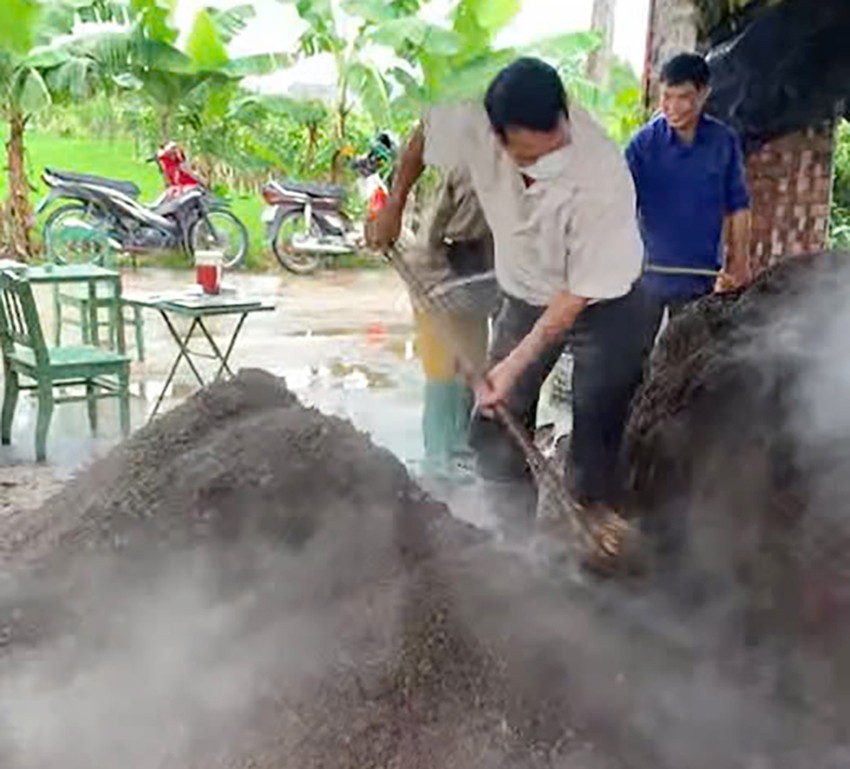
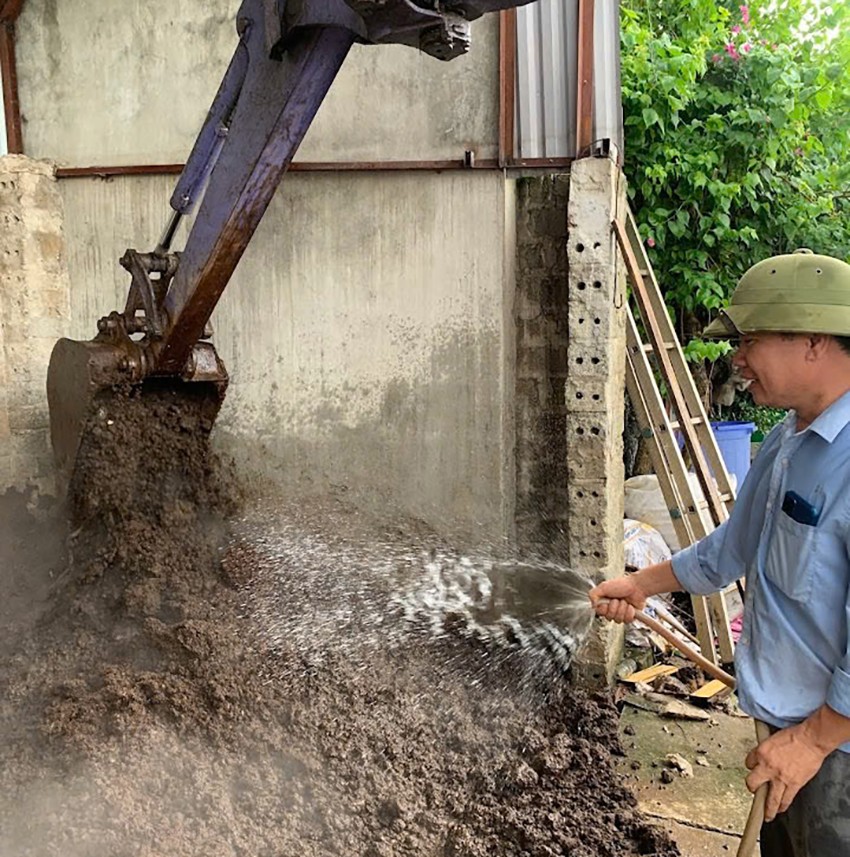
Five composting formulas were tested with main ingredients including chicken manure, cattle manure, and pig manure. Animal manure accounted for 85–95% of the total, sourced from local small-scale farms. The remaining ingredients were rice straw and rice bran. The materials were mixed thoroughly with clean water to ensure optimal moisture, then piled for aerobic fermentation under shelter. One strenuous and challenging task for aging farmers in composting is turning the piles. As a result, composting has become an increasing burden for PGS farmers, especially when certified commercial organic fertilizer is too expensive and cheaper alternatives are not permitted. Weekly turning was the most demanding challenge compared to traditional composting, which usually required turning only once a month. Five compost piles were created, with material quantities ranging from 2.4 to 3.9 tons. Among them, three piles were mixed and turned weekly by Bai Thuong Cooperative using an excavator, while two piles utilized hired labor for manual mixing and turning to compare the difference.
Manual mixing and turning to compare differences.
Pile temperatures measured every morning reached 60–75°C, with detailed records kept of external weather conditions as well as surface and deep temperatures. The composting process was completed after 11 weeks, and five samples of the finished compost were sent for laboratory testing of nutrient content, heavy metal residues, antibiotics, and microorganisms to ensure the compost met standards for organic vegetable production. All five formulas, with varying animal manure compositions and ratios, exhibited differences in nutrient profiles that serve as a baseline for calculating suitable fertilizer recommendations for each crop. Notably, post-composting testing yielded very positive results: no antibiotic residues were detected, and heavy metal concentrations were well below the thresholds permitted under Vietnamese standard QCVN 01-189:2019/BNNPTNT. To evaluate effectiveness and formulate application recommendations, Bai Thuong Cooperative conducted field trials on five types of vegetables: tomatoes, green beans, cabbage, spinach, and potatoes. The trials commenced on November 1, 2024. Compost was incorporated into the soil 10 days before planting at a rate of 1.5 kg to 3.0 kg/m² depending on the crop. Top dressing was applied to fruit and root vegetables as needed. Spinach was harvested earliest, 40 days after sowing, and testing showed good results: free from heavy metal residues and harmful pathogens. Other vegetables will continue to be sent for analysis upon harvest.
Farmers participating in the field workshop directly observed the trial crops in the field and heard a report from Mr. Hoang Van Hung, Director of Bai Thuong Cooperative, who directly prepared the compost and conducted the vegetable trials. Experts and farmers exchanged experiences and insights. Collective composting, a primary solution proposed at the workshop, was enthusiastically discussed by farmers. Shared participation and mutual responsibility and benefits within the organic farming community are the core values of the PGS network in Vietnam.
Through the trials, adopting the Japanese composting method eases the burden of collecting green plant materials—which typically accounted for up to 50% of the compost mix in traditional methods. In this method, rice bran and straw are readily available rural by-products making up only 1–5%, without reliance on EM or introduced foreign microbes, while animal manure is readily procured from collection facilities.
An excavator mixing compost piles and turning compost weekly.
The challenge of strenuous weekly pile turning was convincingly addressed by the two trial farmers based on concrete records of machinery rental days, labor costs, and materials used in each compost pile. Renting an excavator to mix and turn the compost weekly helps reduce costs and spares farmers from excessive physical labor. Sharing benefits, saving costs, utilizing local materials, and especially controlling the composting process to ensure standard-compliant quality are how smallholder farmers in PGS are working together, contributing to the development of effective, sustainable organic agriculture locally.
_(Source: Vietnam Organic Agriculture Association)._
Need advice on PGS certification?
Contact the PGS Vietnam Coordination Committee for support.
Contact Us Now