
The craft of making fresh rice vermicelli and cakes in Dong Quang (Ha Hai village, Linh Toai commune, Thanh Hoa) has become the livelihood of many local households. Over half a century later, the noodles still retain their familiar authentic rice flavor, but the production process has evolved: machinery has gradually replaced manual labor, products have established brands, and markets continue to expand...
From Rice Grains to a Craft Village Brand
Origins and the Dong Quang Noodle-Making Process
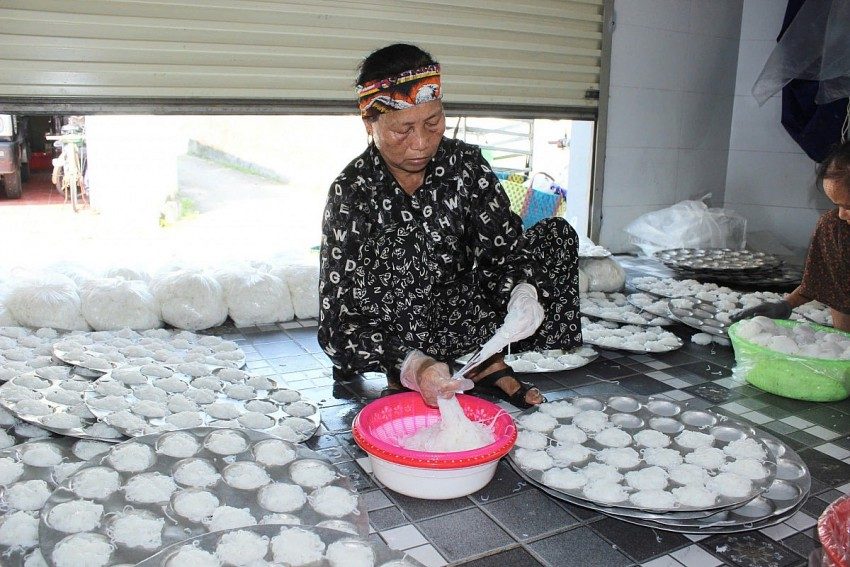
Mornings in Ha Hai usually start very early. While many village roads are still quiet, at the noodle-making workshops, rice has already been prepared, soaked, and ground into flour before passing through multiple stages to yield soft, white strands of rice vermicelli.
To outsiders, making rice noodles might seem like nothing more than rice and water. But those in the trade know that the quality of each batch depends on every single step. The rice variety must be suitable, the batter must reach the exact consistency, and processing times must be precise. A deviation in just one step can leave the noodles crumbly, tough, or lacking their essential chewiness.
Historical records show that noodle making emerged in Dong Yen village (now Ha Hai village) in 1973. At that time, villagers mainly utilized home kitchens, performing each step by hand and selling their noodles locally. Products lacked packaging and labels; to retain customers, producers relied entirely on quality and reputation.
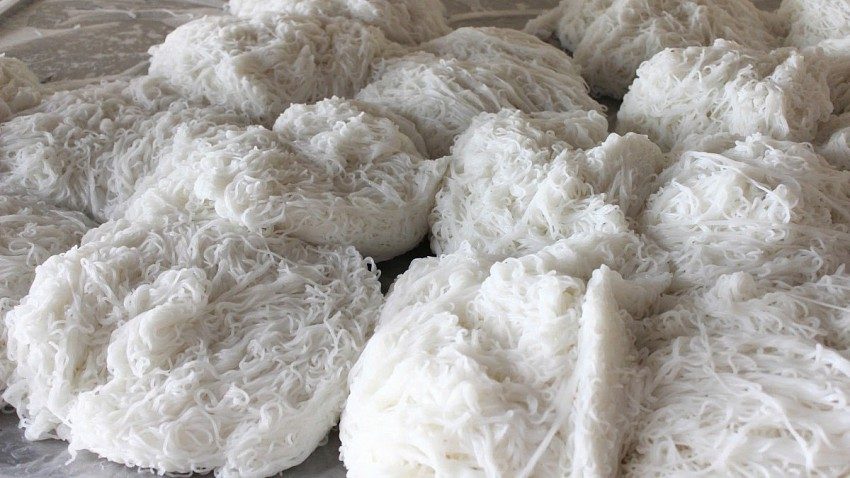
Over time, Dong Quang vermicelli developed its own distinctive profile: a prominent non-glutinous rice flavor, a natural color that avoids unnatural gloss or whiteness, and a mild, pleasant aroma fresh out of production. These simple characteristics established the product's signature identity in the daily lives of local communities.
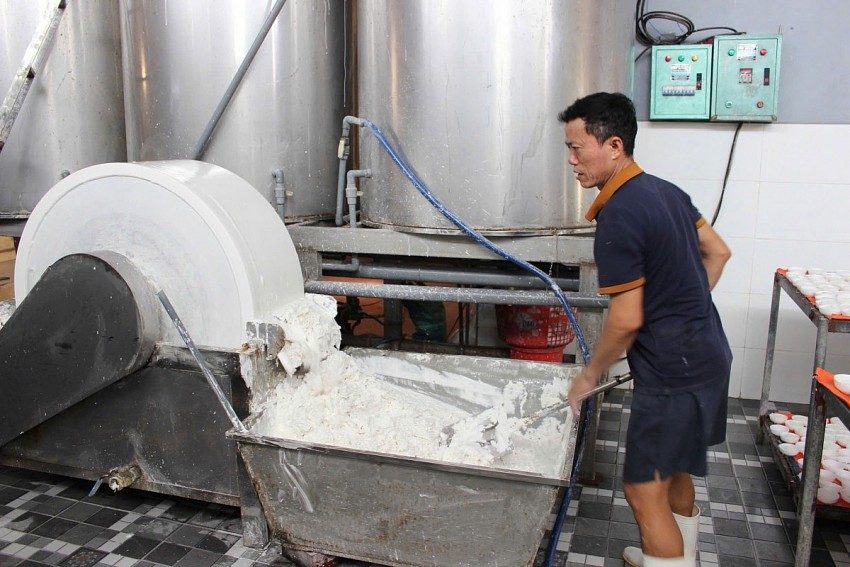
Between 2005 and 2010, households began investing in machinery to reduce manual labor. From 2010 onward, several facilities introduced automated lines into production, boosting output and ensuring greater consistency across batches.
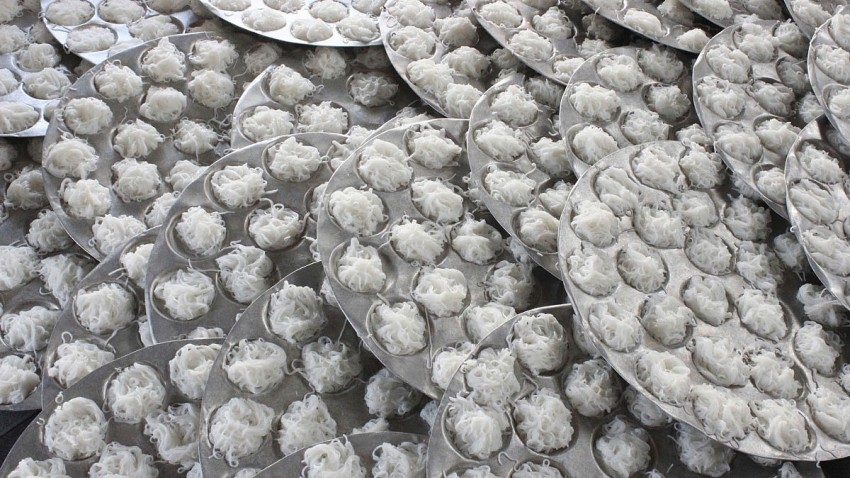
The Thanh Dam Vermicelli facility also grew out of this transformation. Built on traditional craftsmanship, the establishment progressively invested in machinery, streamlined production workflows, enhanced product quality, and perfected packaging. The recognition of Thanh Dam Vermicelli as a 3-star OCOP product marks a significant milestone, illustrating how craft village products are evolving from local staples into goods with clear brand identity and certified standards.
Mr. Trinh Thanh Dam, owner of the Thanh Dam Vermicelli facility, shared that while making vermicelli might look simple at first glance, maintaining consistent quality hinges on meticulous attention to every stage.
“When producing food, your first priority must always be the consumer. When you make food for others to eat, safety and cleanliness must come first. This craft is deeply tied to my family and homeland, so I am determined to preserve the traditional flavor of our vermicelli, but our production methods must become increasingly systematic and professional,” Mr. Dam shared.
Solving Environmental Challenges as the Craft Village Expands
When production remained small-scale, each family could manage wastewater treatment within their own household. However, as output surged, environmental issues quickly became a shared challenge for the entire village.
Prior to 2019, manufacturing households primarily relied on on-site biogas digesters to store and treat wastewater. As production volume expanded, several tanks degraded and capacity could no longer keep pace, resulting in untreated runoff and foul odors.
Households subsequently pooled funds to construct a shared holding tank designed for sedimentation, filtration, and treatment. Nevertheless, by early 2021, the system was once again overloaded. This reality demonstrated that wastewater management in a food-processing craft village could not rely solely on piecemeal solutions by individual households.
Facing this urgent need, local authorities and producers collaborated to identify suitable long-term solutions. The shared tank system was upgraded; the commune partnered with the Environmental Monitoring Center to implement more effective treatment technologies, and the post-treatment drainage canal system was concreted.
In 2024, the newly upgraded system officially became operational, significantly improving the environmental conditions of the craft village. This represented a pivotal shift in the development journey of Dong Quang vermicelli. As a traditional craft transitions to commercial scale, product value is no longer defined solely by delicious noodles, but also by clean ingredients, rigorous food safety, standardized processes, and responsibility toward the living environment.
According to Mr. Hoang Huy Tu, Chairman of the People’s Committee of Linh Toai Commune, the craft of making rice noodles in Dong Quang not only yields iconic local specialties but also generates steady employment and income for local residents.
Currently, the craft village comprises 9 households producing with modern machinery alongside numerous families involved in distribution. On average, facilities supply approximately 9 tons of fresh rice noodles and cakes daily, generating revenues of around 1.8 to 2.2 billion VND. The trade provides livelihoods for hundreds of workers, offering monthly earnings of roughly 4 to 5 million VND per person.
Alongside production growth come greater responsibilities for local authorities. According to Mr. Tu, in addition to supporting craft development, local authorities must actively collaborate to resolve emerging challenges, particularly environmental sanitation and food safety. These form the essential prerequisites for craft village products to maintain credibility as their market continues to widen.
From a trade born in modest family kitchens in 1973, Dong Quang rice vermicelli has journeyed across more than half a century. Hands that once worked entirely manually are now aided by machinery; products once sold only in nearby neighborhoods have become branded commodities, including Thanh Dam Vermicelli's recognition as a 3-star OCOP specialty.
Production practices have adapted to meet market demands, yet the core value of the craft remains rooted in honest rice grains and familiar local flavors. Preserving that authenticity while operating safely, methodically, and in harmony with the environment is the way this historic craft continues to thrive in modern life.
Source: VOAA
← Activity News